Virtual Props …or when you turn fiction into reality

I do not think “virtual prop” is a commonly used term. This is a term I coined to describe these projects when someone undertake the challenge of making a real life version of an accessory only seen in a video game or in an animated movie.

These projects are the most fascinating and challenging. Creators of virtual accessories have much more latitude since technology and possibilities are endless in imaginary worlds. When making a real life replica of an accessory which only exists in a video game or in an animated movie, you encounter the limits of reality.

I had the opportunity to collaborate with several devoted fans who have been up to that challenge. One such example is a real life version of the Proton Pack seen in the video game version of GhostBusters (GhostBusters – The Video Game, released in 2009).
Here is a video of the result:

Spotted: LED prop in ARGO

argo-movie-posters

Thanks to the publicity generated by the 2013 Oscars Ceremony, I recently watched ARGO, the excellent historical drama thriller about the rescue of six American diplomatic personnel out of revolutionary IRAN.

To my surprise, this movie features a LED prop, a robot costume briefly seen at a launch party for a fake movie project. ARGO, released in 2012, relates to events which took place in 1980. Is it a coincidence to find LEDs in the eyes of a robot costume for this era? Surely not. Part of the job definition of the prop master is to research and make sure the technology used in props is appropriate for the era in which the movie is set to take place.

In ARGO, the use of LEDs was an excellent choice for a SCI-FI movie of the early 1980s. The only detail they might have missed is the color choice of the LEDs, as I believe they made them blue. Blue LEDs were only introduced years later.

Who makes these movie props?

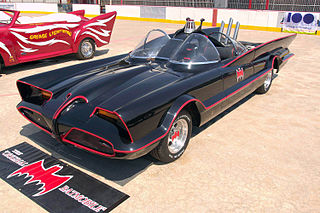
Most movie props are built by anonymous propmakers, part of movie studios prop departments. Except for renowned star car builders such as George Barris, who is known for star cars such as the original 1966 Batmobile and two of the three versions of K.I.T.T., the Knight Rider car – the Super Pursuit and the convertible (season 4).

ImageWhen you watch a movie, look for Property Master or Prop Master in the ending credits. The Internet Movie Data Base (iMDB) is also of great interest to find the names of prop makers for your favorite movie or TV show.

Prop departments also subcontract some of the work to independent builders, working on tight deadlines. They grab whatever they can find. This is how some LED panels I made, which were intended for a Knight Rider KITT replica, ended up being used in a console in The Cape (1996-1997 TV series) and some others in Seaquest.

LED clapperboards

In this post, I want to write not about a prop, but rather about an interesting piece of equipment used on sets: the clapperboard.

The clapperboard is the black slate seen at the beginning of a scene, with a clapper on top. It is often seen in the bloopers bonus section of a DVD movie. In addition to its obvious usage to identify scenes and takes, the clapping sound is used as a clue to synchronize audio tracks with video.

In the very beginning of cinema, the clapper and the slate were two separate devices. Then someone had the great idea to put the two devices together so that it could be operated by a single person.

Image

Decades later, the clapperboard got an overhaul by adding an LED display. As can be seen in Matthew L. Davies US patent number 6831729, the electronic version does more than just displaying time on a red digital readout. The digital clapperboard has microprocessors and communication ports, sending sync signals. Therefore the clapper on a digital slate is no longer needed. Some models do have a clapper for nostalgia and tradition.